StockX is an online marketplace for sneakers, streetwear, collectibles and electronics, founded in Detroit and launched in February 2016 by Dan Gilbert, Josh Luber, Greg Schwartz and Chris Kaufman. Instead of fixed prices it matches buyers’ bids with sellers’ asks, and every item is meant to pass through an authentication centre before it reaches the buyer.
The bid-and-ask system
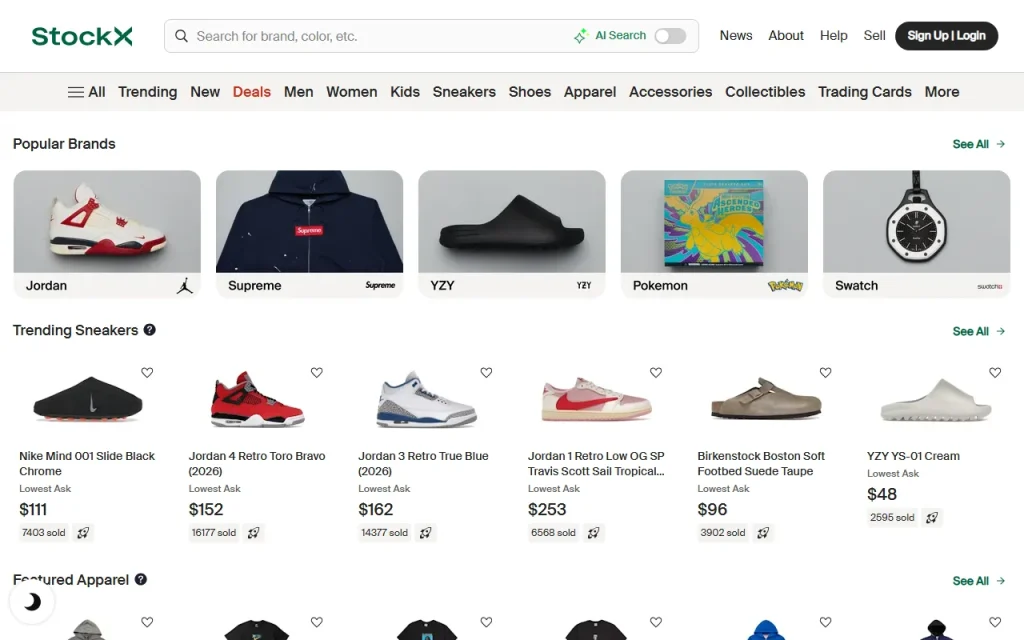
Each product page shows the highest bid and the lowest ask, the way a stock ticker does. A buyer can pay the lowest ask immediately or place a lower bid and wait; a seller can accept the highest bid or list a higher ask. When the two match, StockX takes the payment and tells the seller to ship.
Authentication
The seller ships to a StockX authentication centre rather than to the buyer. Reports on the process describe reviewers checking around 20 to 30 details on a pair of shoes, such as materials, stitching, labels and smell, before attaching a tag with a QR code that links to the inspection record. Company statements put the staff at over 300 authenticators across eleven centres. If the item fails, the sale is cancelled and the buyer is refunded.
What it costs
Buyers pay the price, shipping and a processing fee shown at checkout. Sellers pay a fee that StockX sets by seller level and category. Check the figures at the point of sale because they change.
Why the process still matters to buyers
StockX publishes a statement about its authentication programme on its own site, which is worth reading for how it describes its checks. Authentication reduces the risk, but the inspection is human and not infallible, so keep the tag, photograph the item when it arrives, and use the platform’s support channels quickly if something looks wrong.
What we could not verify
We did not buy through StockX, so we have not tested authentication ourselves. Counts of authenticators and centres are company-reported and may have changed.